Tire Inspection
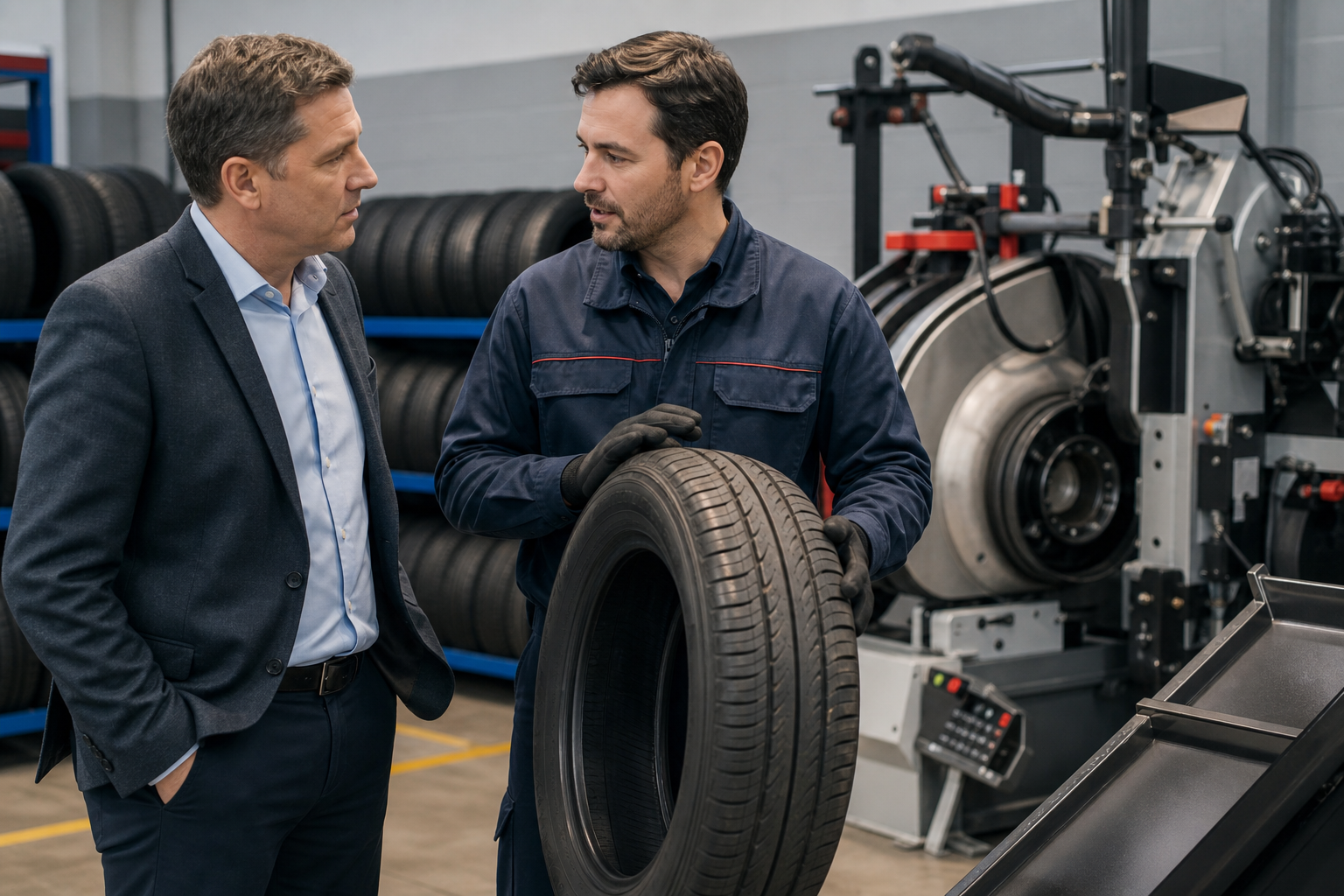
Check tread, sidewall, casing condition, wear pattern, and overall suitability before operation.
A controlled mechanical process for improving roundness and tread surface consistency on suitable inspected tires.
The process must begin with tire inspection and should be operated by trained personnel.
Tire truing is based on rotating the tire, identifying high spots or surface variation, and gradually removing excess tread material where appropriate.
Check tread, sidewall, casing condition, wear pattern, and overall suitability before operation.
Mount the tire securely on the machine and prepare it for rotation and observation.
Use the machine to remove selected high spots from the tread surface gradually.
Review roundness, surface consistency, and tire condition after processing.
The operator checks the tread, sidewall, casing condition, wear pattern, and general safety condition. Tires with cracks, bulges, exposed cord, severe damage, or unsafe structure should be rejected.
The machine is only for tires that are suitable for professional truing or reconditioning after inspection.
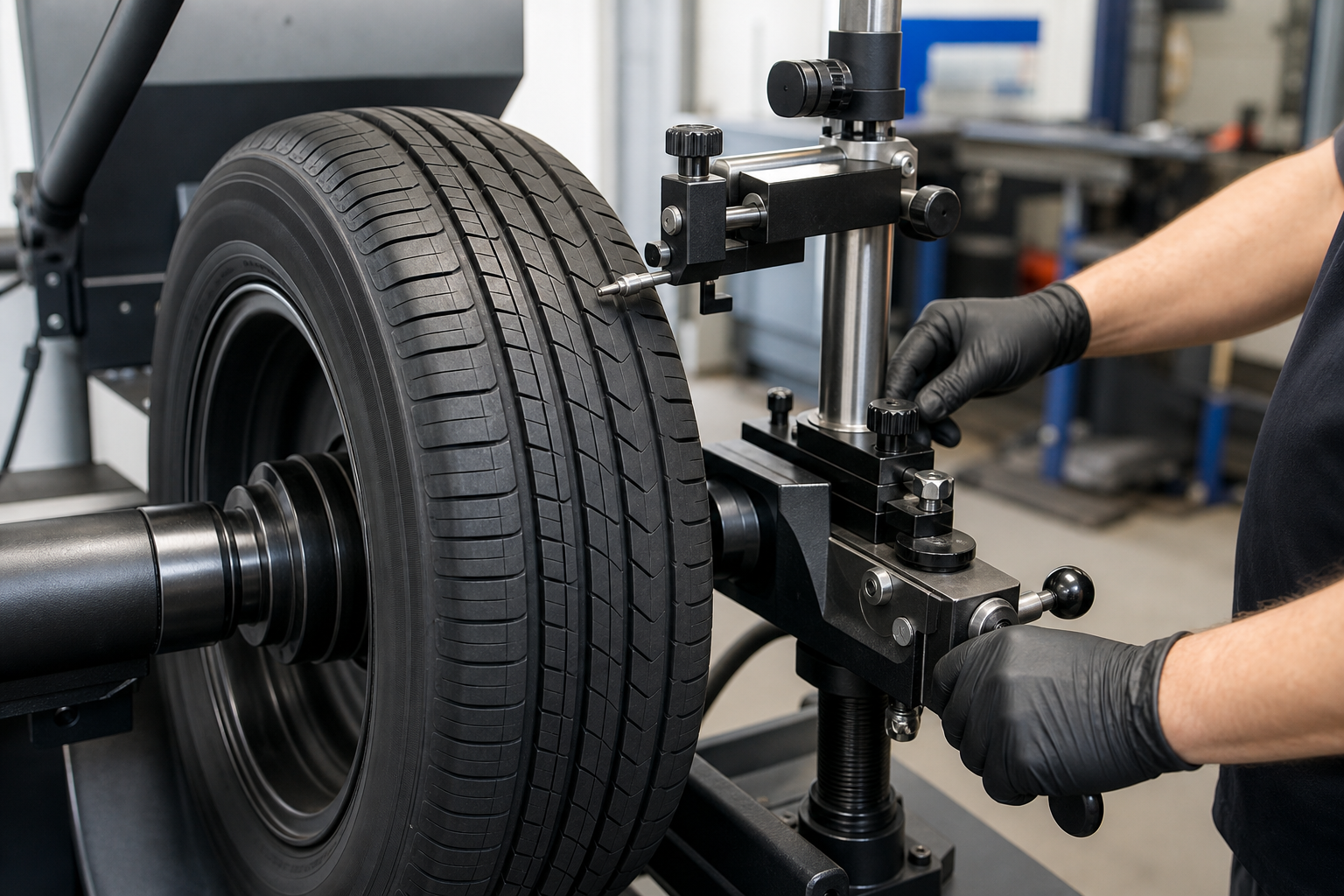
After inspection, the tire is mounted onto the machine and rotated so the operator can observe roundness variation and surface unevenness.
The operator then uses the machine to remove selected high spots from the tread surface. The process should be performed gradually and professionally, based on tire condition and operator judgment.
Tire truing and reconditioning is not a solution for every tire problem. It does not repair structural damage, and it should not be used to hide defects or bypass safety inspection.
Request the demo video and product information to evaluate whether the machine fits your business.